

When it comes to hair loss, it starts off subtle. Your hair loss doesn’t happen suddenly but the slight shedding starts off with a few strands on the pillow, parting appearing wider or the hairline inching backwards seemingly overnight. You try every trick and trade: from medicated shampoos to natural oils and oral supplements, yet most don’t do much.
if you’re looking for a treatment backed by growing clinical interest, Microneedling for Hair Loss has become one of the most talked-about options. Although it first gained popularity as a skin rejuvenation procedure, it is now being widely used to stimulate hair follicles and support healthier hair growth.
There’s one therapy that is taking the hair care market by storm – Microneedling.
While it is known as a skin treatment, does it really address hair loss issues? Read on!
What Is Microneedling?
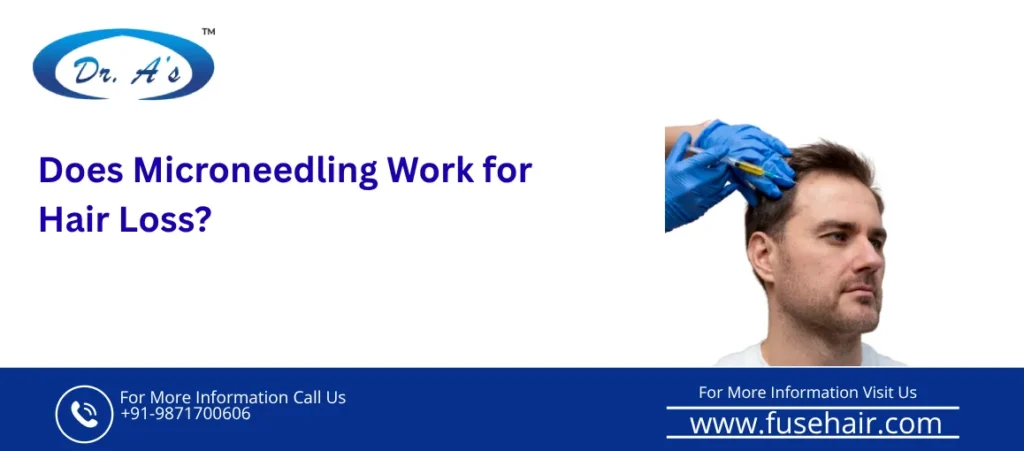
The handheld gadget used is equipped with micro needles of hundreds of thousands in number. The tiny needles on the tool make many small, intentional holes into the inner skin tissue (called the dermis) on the scalp when used to stimulate it. They cause trauma but it’s minimally invasive; you’ll feel a slight prickling sensation on your scalp. This creates micro-injuries, and as your skin’s healing mechanisms kick into gear, your scalp becomes flooded with the growth factors needed to stimulate the activation of dormant hair follicles.
What Does Science Actually Say?
But here’s where things really start getting cool. Microneedling is not just a trendy add-on therapy for hair loss – it’s actually being backed by science. According to one study published in the Journal of Cutaneous and Aesthetic Surgery, patients who received both microneedling treatment along with minoxidil, experienced a lot better hair regrowth results as compared to those only using the standard minoxidil treatment.
Another 2013 study reported a 40% increase in the hair count in its test subjects after the patients had been subjected to the microneedling treatment for 12 weeks.
It’s said that the little channels created from the microneedles in the skin aid in absorbing topicals like minoxidil better, whilst also stimulating stem cells within the hair follicle directly. The findings are encouraging especially for the common pattern of hair loss known as androgenetic alopecia, the most common form of baldness in men and women. While this does not offer a total cure it still acts as significant support to other therapies.
Who Can Benefit from Microneedling?
If the patient does suffer from hair loss, microneedling treatments will only be able to have effects on mild to moderate hair loss. If your hair follicle is alive but it’s merely resting, or not working to grow new hair then this type of therapy will prompt that follicle to grow hair again.
But, in cases where large bald patches exist in which the follicles have remained dormant for several years, microneedling can’t provide any hair regeneration. At that stage, options like the best male hair transplant in Delhi would be the long term, more efficient option.
Microneedling vs. PRP — What’s the Difference?
PRP therapy is almost always being contrasted with microneedling. People almost always compare the two treatments: Both procedures are geared towards stimulating the growth of hair but in a completely different way. With PRP treatment, you simply have your own blood drawn out, your blood is then processed to separate and enrich the blood platelets, and this plasma is then injected into your scalp.
Blood platelets contain powerful growth factors which stimulate repair and nourishment directly into the hair follicles.
In fact, at some clinics, the two procedures are combined – microneedling is performed, after which the PRP is directly applied. The PRP Hair cost in Delhi is also worth finding out before deciding if it is a treatment for you. Depending on the number of sessions you are likely to need and how the treatment procedure works, you should expect to need between 3 and 4 PRP sessions each month apart.
Can Microneedling Replace a Hair Transplant?
In simple terms, no. Microneedling helps with existing hair follicles as it’s a non-surgical treatment. Hair transplantation introduces new follicles into bald patches where they no longer grow. As you can see, Microneedling acts more like upkeep and early treatment whereas Hair Transplantation is reconstruction. If you are considering between the two options, it is highly advised to book a consultation with a top hair transplant clinic in Delhi so you understand the current stage of hair loss.
Things to Keep in Mind Before Starting
You should never try microneedling a DIY treatment but always have it performed by an expert, trained skin professional The treatment time is also lengthy and the most clients do not see dramatic results for 8 to 12 weeks Combining it with other treatments like a minoxidil treatment or PRP is beneficial It does not make the treatment option for those who suffer from an active scalp infections or inflammatory scalp disorders.
Final Thoughts
One of the few treatments out there that actually lives up to the hype-as long as it’s performed in the right context, for the right people. Microneedling for hair loss won’t do the job on its own, but it’s a very low-risk, very effective complement to other hair loss remedies that can help curb shedding and boost growth. Considering you’re concerned with hair loss and might seek professional help, see what they do in a male hair transplant in Delhi – beyond hair transplants.
Many surgeons or hair doctors will be able to help diagnose your hair loss stage, advise if they recommend microneedling, a PRP procedure, hair transplants or a combination treatment. When the hair is thinning you’re not in the position to wait- the sooner you begin any form of treatment, the more options you’ll have.

Dr. Arvind Poswal
Dr. Arvind Poswal is a hair transplant specialist, dermatologist, inventor, author, and teacher with a deep passion for advancing hair restoration. With medical training from Armed Forces Medical College, Pune and dermatology training in Australia, he has spent years exploring better more natural approaches to hair restoration. His expertise includes FUE/FUSE hair transplantation, beard-to-scalp transplantation, aesthetic procedures, and regenerative therapies. He has authored books, trained fellow doctors and contributed to innovations in hair restoration while being associated with leading international hair restoration societies.