
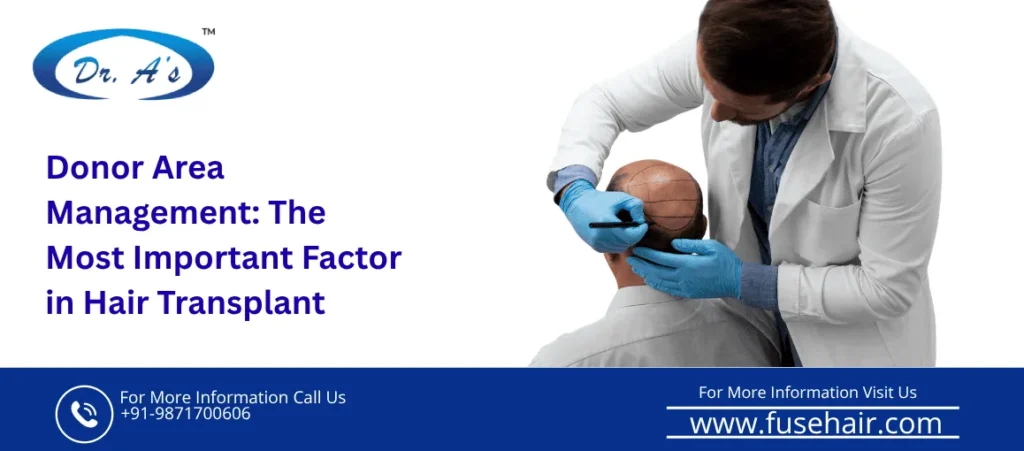

When people think about getting a hair transplant they usually focus on the hairline or the final results. What really determines if the procedure is successful is something many people overlook. The donor area hair transplant. The donor area is the foundation of any hair transplant. If it is not taken care of properly even the advanced procedure can fail to deliver natural and long-lasting results. Whether you are planning a hair transplant in Delhi or just looking at your options understanding how to manage the donor area is essential.
In this blog we will explain why the donor area matters, how it affects the results and what you should look for in a hair transplant clinic in Delhi.
What is the donor area in a hair transplant?
The donor area is the part of the scalp, the back and sides where healthy hair follicles are taken out for transplantation.
These follicles are chosen because they are genetically resistant to hair loss, long-lasting and good for transplantation. In a hair transplant these follicles are carefully moved to areas with thinning or no hair.
Why is managing the donor area important?
The donor area is a resource. Once hair follicles are taken out they do not grow back in the spot. This means that if the donor area is not managed properly it can lead to thinning in the donor area. Taking out many hair follicles can damage future transplant options. If the extraction is not even it can create visible patches.
Proper management of the donor area ensures that the appearance is balanced and the results are natural. It also helps with long-term planning.
What are the key goals of managing the donor area?
A successful hair transplant focuses on extracting hair follicles across the donor area hair transplant to avoid visible gaps.
- Even extraction is important to avoid gaps.
- The goal is to remove grafts without making the donor area look thin.
- Doctors must plan for hair loss and potential additional sessions.
How does the latest hair transplant technology help?
Modern advancements like the hair transplant technology have improved managing the donor area significantly.
Benefits include precision extraction tools, damage to surrounding follicles, faster healing and reduced scarring. Techniques like Sapphire FUE allow surgeons to extract grafts accurately preserving the overall look of the donor area.
What are the risks of donor area management?
If the donor area is not handled properly several issues can occur.
- Taking many grafts from one area can cause visible thinning.
- Uneven extraction leads to gaps.
- Improper techniques can leave scars.
- Damaging the donor area reduces the possibility of transplants.
These risks highlight why choosing a clinic is crucial.
What factors affect the quality of the donor area?
Not everyone has the donor capacity. Doctors evaluate the hair density, hair thickness, scalp condition and age and hair loss pattern.
- Hair density is important because higher density means more grafts can be safely extracted.
- Hair thickness provides coverage.
- A healthy scalp ensures healing and graft survival.
- Future hair loss is considered before extraction.
What techniques are used in managing the donor area?
FUE or Follicular Unit Extraction is a technique where individual follicles are extracted resulting in scarring and faster recovery. FUT or the Strip Method is a technique where a strip of scalp is removed leaving a scar. This technique is commonly used today. Modern clinics prefer FUE due to control and aesthetics.
How can you protect your donor area?
Patients also play a role in maintaining donor area health. Before the procedure it is essential to avoid smoking and alcohol maintain a diet and follow the doctors instructions. After the procedure avoid touching or scratching the area follow washing guidelines and use medications.
Why is it essential to choose the clinic?
If you are planning a hair transplant in Delhi selecting the clinic is critical for proper donor area management.
A professional hair transplant clinic in Delhi will analyze donor capacity carefully plan extraction strategically use tools and techniques and focus on long-term results. Avoid clinics that promise graft numbers without proper evaluation.
What is the importance of the donor area in aesthetics?
A successful hair transplant is not about the front. It is about balance.
A managed donor area looks natural even after extraction maintains uniform density and supports future procedures if needed. This balance is key to achieving results.
What are some common myths about the donor area?
Myth 1: Donor hair grows back after extraction. Reality: Extracted follicles do not regrow in the spot.
Myth 2: More grafts mean better results. Reality: Overharvesting can damage both donor and recipient areas.
Myth 3: Donor area is not visible. Reality: Poor management can make thinning visible with short hair.
What is the role of expertise in managing the donor area?
Hair transplant is not a technical procedure. It is a combination of science and artistry. Experienced surgeons understand hair patterns plan extraction carefully and maintain density. This expertise ensures that the hair transplant process delivers the results.
Conclusion:
In conclusion the donor area hair transplant is the backbone. Management of the donor area ensures results, long-term success and the possibility of future treatments. With the help of the donor area hair transplant preservation has improved significantly. However the skill of the surgeon and the choice of clinic remain the important factors. If you are considering a hair transplant in Delhi always choose a trusted hair transplant clinic in Delhi that prioritizes donor area health much as the final result. Remember, a great hair transplant is not just about adding hair. It is, about maintaining balance, planning for the future and achieving results that look completely natural.

Dr. Arvind Poswal
Dr. Arvind Poswal is a hair transplant specialist, dermatologist, author, inventor and teacher. Trained at Armed Forces Medical College, Pune and in Australia, he specializes in FUE/FUSE, beard-to-scalp transplantation, aesthetic procedures and regenerative hair restoration techniques with 25+ years of experience.
- Hair transplant specialist
- 25+ years experience
- Father of Hair Transplants in India