
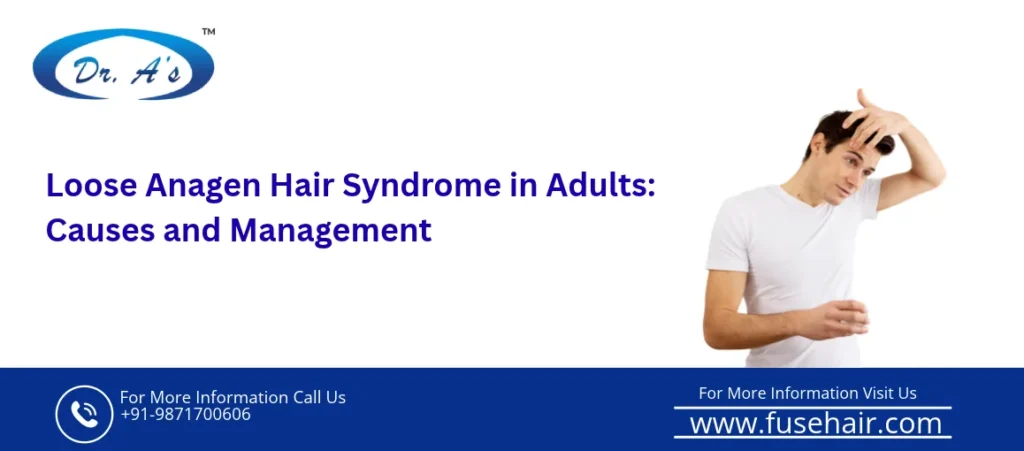

One of the less common causes of excessive hair loss is Loose Anagen Hair Syndrome (LAHS). LAHS affects the way hair strands are attached to the scalp. As a result, the hair can come out during simple acts like brushing and washing, as well as during gentle pulling. Though LAHS is often diagnosed during childhood, adults can develop the condition as well. Familiarity with the causes, symptoms, and diagnosis of this condition helps in arriving at the proper management strategy. It is important to have an early evaluation by a hair specialist in order to identify LAHS and prevent unnecessary, and often painful, invasive procedures.
What Is Loose Anagen Hair Syndrome?
Loose Anagen Hair Syndrome (LAHS) is a condition in which hair is not firmly embedded in the follicles. During the anagen phase, the hair root should remain firmly attached to the follicle.
In LAHS, the attachment between the hair shaft and the follicle is weak. Therefore, the hair can be pulled out with very little force. This may lead to thinning of the hair on the scalp. LAHS is usually considered a non-scarring condition. This means the follicles are not destroyed in LAHS and the condition does not prevent the follicles from producing hair.
Management and Treatment Options for Adults
In the case of loose anagen hair syndrome, treating the associated conditions may play a role in controlling hair loss. Overall, the goal is to control hair loss as much as possible, and retain the remaining strands. There are a few options to consider.
These may include:
Using mild shampoos and conditioners: These may be helpful in daily hair care. Use what is least irritating to your scalp.
Avoiding excessive brushing: Use a wide tooth comb on dry hair to remove tangles.
Reduce heat styling: Unnecessary use of styling irons and hair dryers may cause hair to become brittle and break.
Avoiding tight hairstyles: Tight hairstyles may pull on the roots and increase stress on the strands.
Eating a balanced diet: Consuming a healthy and varied diet may provide all of the essential nutrients the body needs to maintain healthy hair.
Seeking medical advice: A dermatologist may have other recommendations based on your diagnosis.
Understand that these measurements are put in place to help protect the hair and not necessarily correct the problem of the follicle attachment.
Can Hair Restoration Procedures Help?
Hair restoration procedures are not common treatments for loose anagen hair syndrome. The suitability of such procedures is also dependent on the underlying cause of hair loss, the condition of the scalp and the stability of the hair loss pattern.
For example, a person interested in a hair transplant in Delhi will first have to undergo a complete scalp evaluation. A hair transplant will not be recommended if the existing hair follicles do not have a good anchoring strength and if the shedding is not controlled.
Just like in the case of hair transplant cost in Delhi, the assessment of the type of hair loss and the treatment will help determine the surgical suitability.
Likewise, people interested in Scalp Micropigmentation in Delhi, should know that although this procedure can help create the illusion of a denser hair, it is of no help with loose anagen hair syndrome.
When to see a hair specialist?
You should see a dermatologist if you have persistent hair loss, if you have issues in hair growth and/ or if you have changes in your scalp hair density. Early evaluation is essential in helping to diagnose the root cause of your problem and rule out other conditions like nutritional and hormonal imbalances, among others.
It is unacceptable to treat hair loss without first determining the root cause of the problem. An accurate diagnosis is essential for the design of a proper management plan.
Conclusion
Loose anagen hair syndrome is a disorder in which hair is initially attached weakly to the scalp. This syndrome can be seen in children and adults. The diagnosis of loose anagen syndrome can be difficult and may be made only after other causes of hair loss have been excluded. There is no special treatment for loose anagen syndrome. Suggested treatment is to practice gentle care of the remaining hair along with a medical evaluation or treatment for any secondary causes.
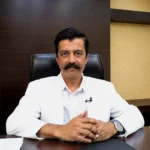
Dr. Arvind Poswal
Dr. Arvind Poswal is a hair transplant specialist, dermatologist, author, inventor and teacher. Trained at Armed Forces Medical College, Pune and in Australia, he specializes in FUE/FUSE, beard-to-scalp transplantation, aesthetic procedures and regenerative hair restoration techniques with 25+ years of experience.
- Hair transplant specialist
- 25+ years experience
- Father of Hair Transplants in India